
Super Healthcare offers adults of all ages, regardless of status, the ability to remain in their own home instead of moving into a care home or other medical environment. This includes adults that are suffering from all stages of dementia. Research has shown that this type of care leads to better health because it offers a familiar surrounding and a more independent lifestyle.
People with dementia experience many problems, both with memory and with cognition. Alzheimer's disease is the commonest form of dementia, but there are other types including vascular dementia and dementia with Lewy bodies. People with Parkinson's disease and other neurological disorders can also develop forms of dementia. Whatever your loved one's specific diagnosis, if they are living with this condition, they are almost certain to need some level of care and support as it progresses.
A person with dementia will need more care and support as their symptoms get worse over time. You may feel that a move into a care home is your only option. If you have been helping someone live independently with dementia, speak to us about our live in care services for people suffering dementia.
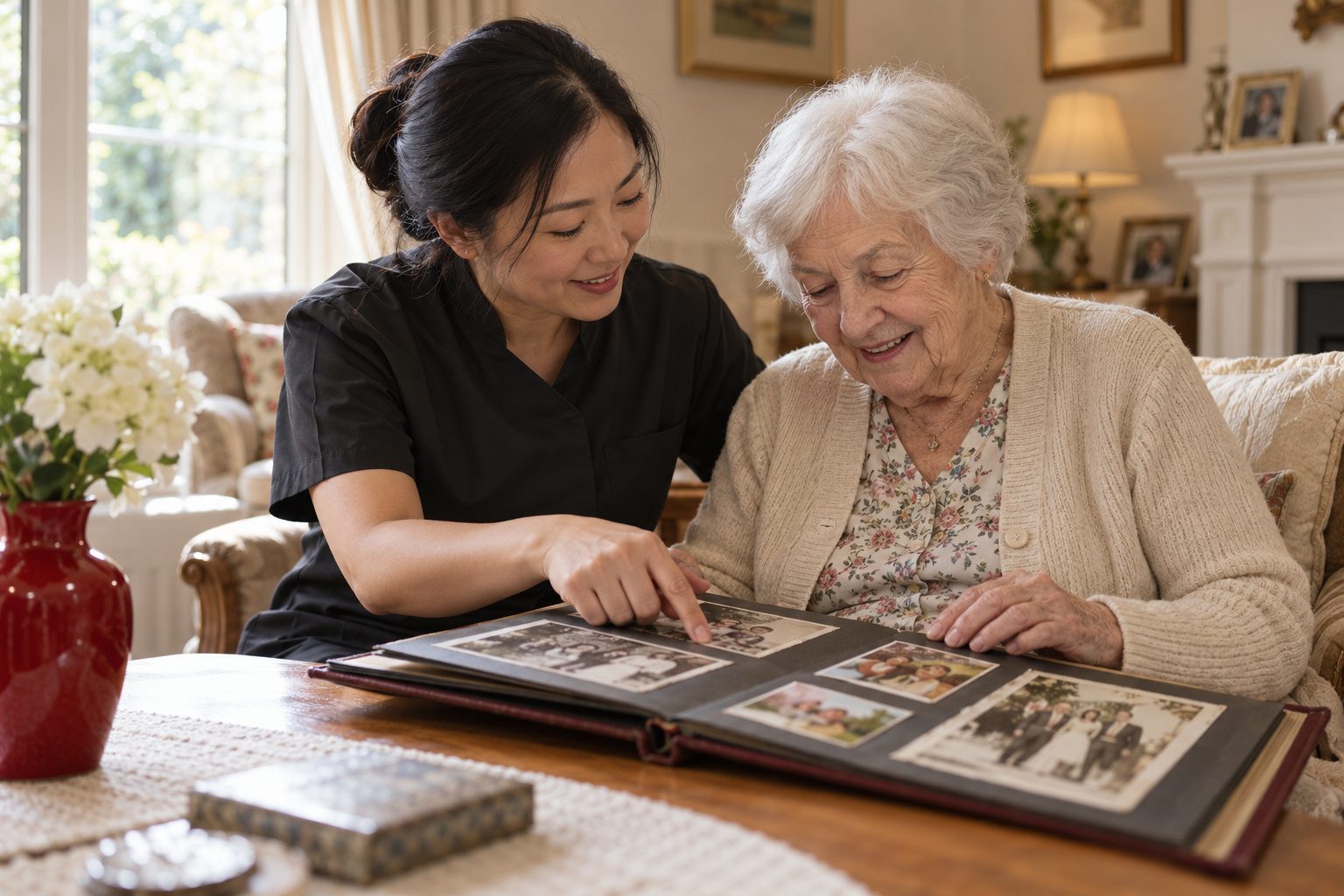
Most people think that sending loved ones to a care home is the only viable option when a person living with dementia reaches the point that they need 24-hour care, and in the past, this was probably the case. Today there is a solution known as live-in care, where companies like Super Healthcare take the stress and responsibility out of vetting and managing a full-time carer for your loved one.
Live-in care & dementia
The majority of older people, when given the choice, would wish to remain in their own homes if they could. Professionals largely agree that it is beneficial for those in later life, especially those with dementia, to stay in their familiar environment as it can be very hard for them to accept change.
One option to find home care is to recruit a private carer yourself. If you organise your own private dementia care, you will need to screen any applicants carefully, check references and ensure that they have suitable dementia care experience and training to be able to provide appropriate care.
You will also have to comply with the legal requirements of being an employer, which can be a large commitment in terms of time and stress. When the carer is on holiday, or absent for any other reason, you will have to engage a suitable replacement, which can cause instability for those being looked after.
The best way to arrange in-home care for your loved one is to find a private live-in care provider, such as Super Healthcare, who will manage the whole process of identifying suitable carers, carrying out extensive background checks, ensuring that carers are suitably trained and even go as far as running personality matching assessments to ensure that carers will bond with care recipients.
For expert advice along with practical information about how Super Healthcare can provide the highest level of care for adults suffering with dementia, call 01702 333120.
 Live-in Care
 Respite Care
 Palliative Care
 Supported Living Services